written by Roberta Lamonica

Chloé Zhao’s adaptation of Hamnet signals a significant shift in the director’s filmography toward literary adaptation, while retaining the hallmarks of her intimate, sensorial directorial gaze. Based on Maggie O’Farrell’s 2020 novel of the same name, the film emerges from a close creative collaboration between Zhao and O’Farrell, who co-wrote the screenplay. This partnership is especially consequential given the novel’s interiorised narration and its reimagining of grief, domesticity, and artistic genesis in early modern England. Rather than treating the source text as a narrative blueprint, Zhao’s approach appears to translate O’Farrell’s affective and temporal textures into a visual and material register—foregrounding gesture, landscape, and the rhythms of everyday life as sites through which mourning and memory are cinematically articulated.

Zhao’s Hamnet may be understood as staging grief not only as an individual psychological process but as a crisis of relation: a breakdown in the capacity of the living to symbolically escort the dead out of the house and into memory. The film’s central tension lies less in maternal loss alone, or even in the familiar opposition between nature and culture, than in the apparent failure of private mourning to metabolize an unrecognized act of substitution. In this light, Hamnet’s death is framed less as random tragedy than as a form of sacrifice—one that occurs without ritual, without witness, and therefore without shared meaning. Formally, Zhao seems to anticipate this failure of private mourning through a recurring use of fade-to-black transitions that close scenes as if they were the acts of a Shakespearean tragedy or the movements of a musical partition. These blackouts do not merely punctuate narrative time but segment experience into discrete, suspended units, imposing a rhythm of interruption in which affect must be carried across absence.
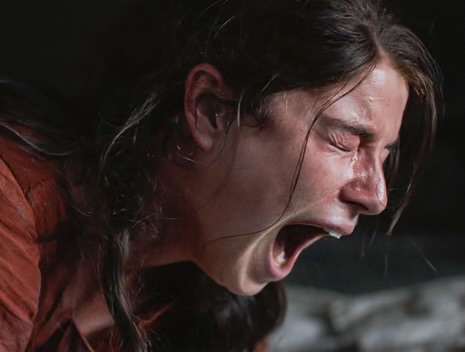
From the outset, the film suggests that mourning may not occur within the continuity of lived experience so much as in the charged interval between presences—in the pause that separates what is seen from what can be symbolically processed.
Agnes is consistently aligned with forms of bodily knowledge: seasonal attunement, tactile awareness, and a mode of perception that precedes verbal explanation. Her early association with the hollow of the tree—womb-like and earthen—aligns her with a register of experience that appears to exceed or precede articulation in language. She senses illness, feels its approach, and remains closely attuned to cyclical rhythms.
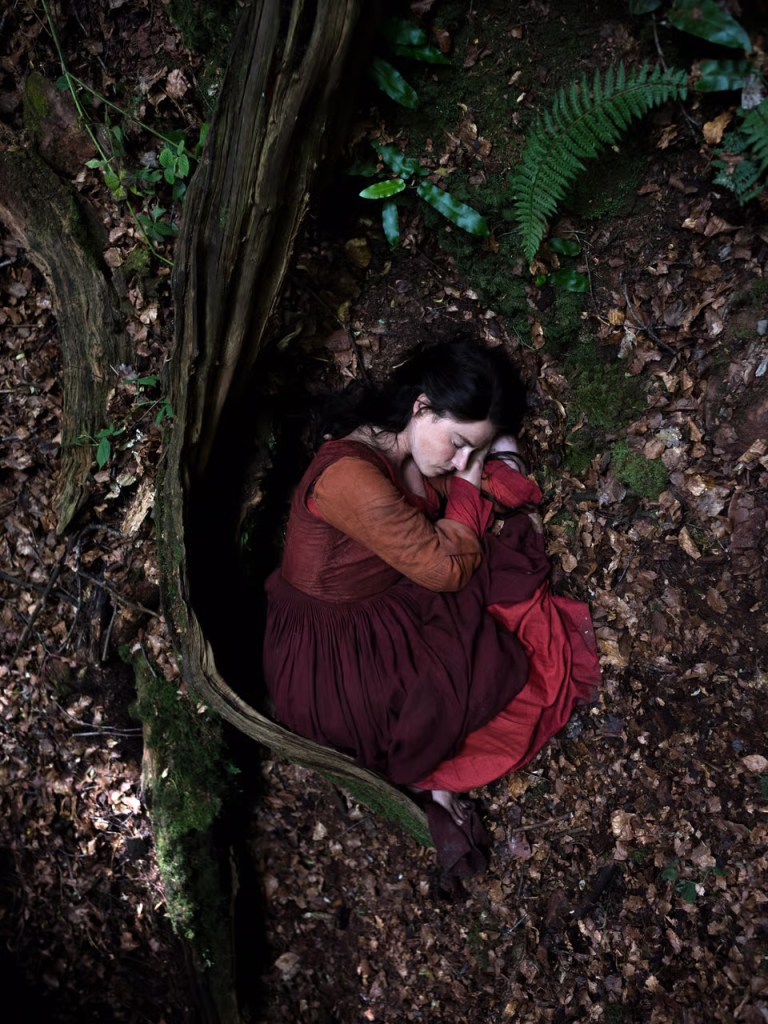
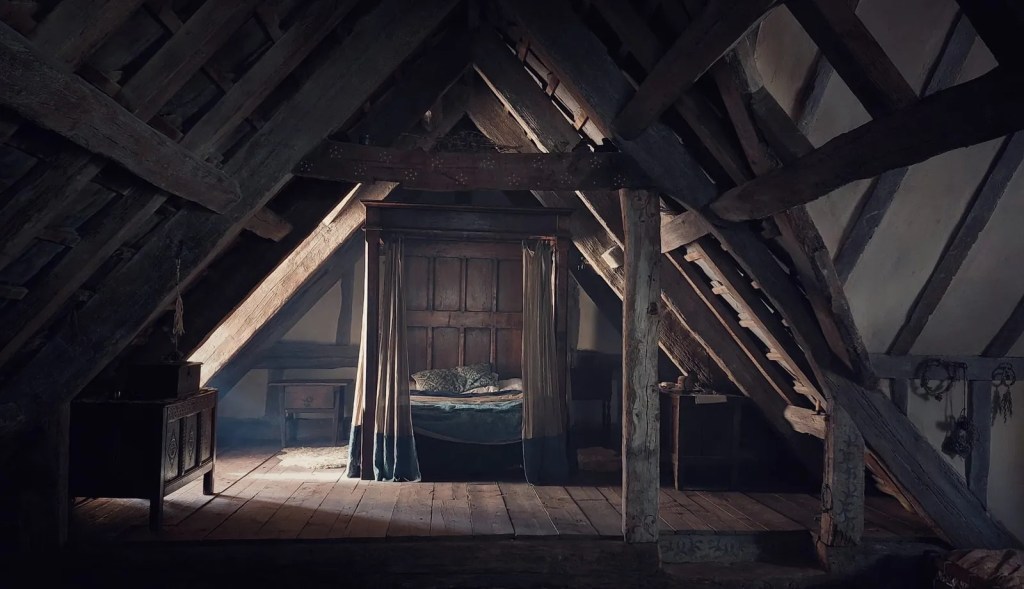
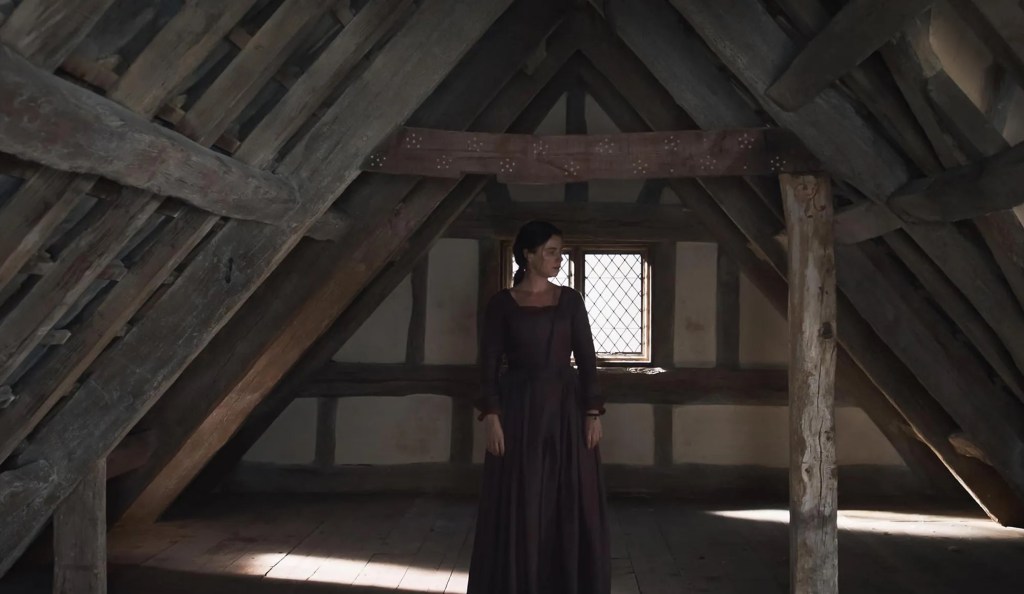
Yet precisely because she inhabits this material immediacy, she appears unable to translate loss into image or word. Her grief remains somatic, dispersive, and difficult to contain. The domestic space that might otherwise hold mourning repeatedly fails her. The house, often framing her beneath slanted rafters or within narrowing apertures, appears to promise containment—an inverted, uterine geometry that suggests enclosure but cannot sustain it. Ultimately, she leaves; the maternal container proves insufficient.
In contrast, Will occupies a domain more closely associated with language, abstraction, and representation, yet performs what might be understood as a structurally maternal function. Through theatre, absence is held, shaped, and eventually named.
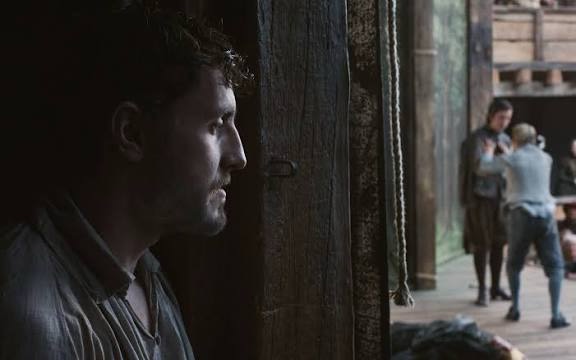
Writing begins to function as a kind of container—holding loss in place long enough for it to take symbolic form rather than dissolve into dispersal. His cool chromatic register—mist, blue-grey interiors, backlit thresholds—marks him as atmospheric rather than substantial, a figure of latency rather than immediacy (“The stuff dreams are made of”). If Agnes thickens space through pigment and warmth, Will diffuses it through distance and symbol. Their tragedy lies not in simple opposition but in non-communication: embodiment without symbol, symbol without body.
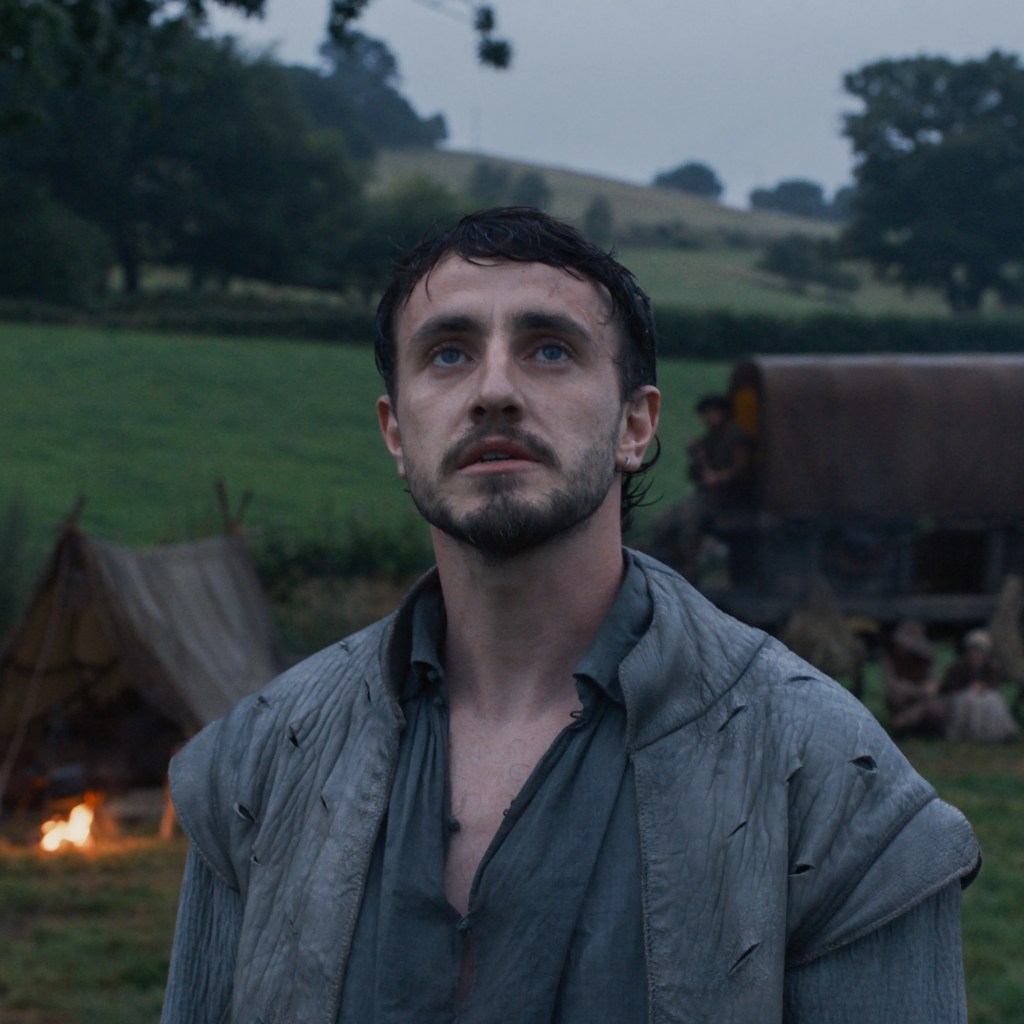
Between them stands the twin logic of Hamnet and Judith. Twinship, in Mediterranean folklore as in myth more broadly, frequently encodes a divided vitality—a life force distributed across two bodies under an implicit economy of survival. One may live for the other; death, in such narratives, can be misdirected once but rarely twice. The plague sequence appears to stage a mimetic substitution. Hamnet lies beside Judith, imitates her breathing, and in doing so seems to draw the illness toward himself. The gesture is not overtly heroicized; it remains instinctive, nearly playful. Yet its structure invites interpretation: he becomes her double so that death may mistake him for her. This may be read less as martyrdom than as a form of mimetic trickery—a magical logic by which fate is confused through imitation.
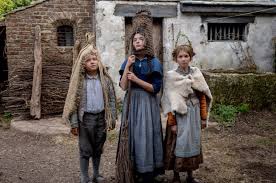
Crucially, this substitution is never publicly recognized. No ritual marks it. Within a Girardian frame, a sacrificed life that remains unseen cannot stabilize the social body; it returns instead as disorder. The family fractures. Mourning becomes privatized. The dead child becomes difficult to symbolically situate—neither integrated into a shared memory of the dead nor fully relinquished by the living. In Southern Italian traditions, figures such as the monaciello or the morticelli describe precisely this condition: relational residues that persist because grief was incomplete, because no collective rite escorted them across the threshold. The house becomes both tomb and grey zone, a site of repetition without resolution.
What the domestic sphere cannot accomplish, theatre may eventually approximate. The play becomes a retroactive rite—a delayed socialization of the dead. Through performance—repetition before witnesses—Hamnet acquires a name, a form, and a shareable narrative. He moves from an unspeakable private loss into a figure that can be collectively remembered. Yet the film’s ethical force lies in refusing to equate representation with release. Speech may create Hamlet; it does not necessarily release Hamnet.
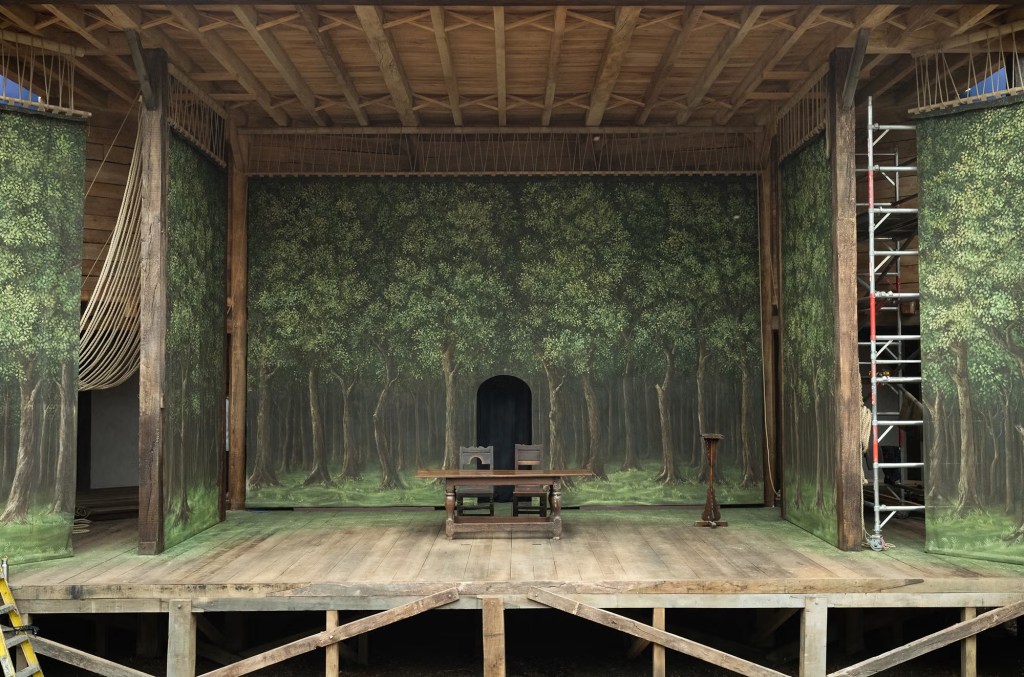
The final movement toward the stage is therefore decisive. Agnes reaches—not to reclaim, but to remain in relation without possession. A gap persists: a frame that prevents fusion. Mourning here is not the recovery of the lost object but the capacity to sustain presence-in-absence. The audience matters because grief must be redistributed. Private memory loops; collective witnessing contains. Surrounded by others, Agnes appears able to allow what she could not in solitude: that the one who died in her stead may finally be escorted into rest.

Touch becomes the privileged sense at this limit. As Irigaray suggests, Western epistemologies often privilege sight and speech, yet the earliest relation between mother and child is tactile—structured through skin, temperature, pressure, and proximity. Agnes’s outstretched hand returns mourning to this pre-verbal register. The almost-touch does not resolve or justify; it acknowledges a bond that preceded naming. It is ethically structured by restraint: a relation that refuses to erase difference even as it sustains connection.
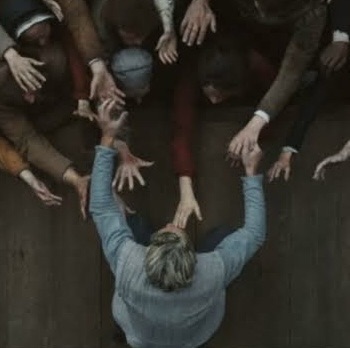
Thus the film’s reconciliation lies neither in the triumph of the feminine nor in the sovereignty of art, but in what Jung would call a coniunctio oppositorum. Nature learns symbol; symbol returns to body. The house’s failed womb is supplemented by theatre’s shared container. Only there can the logic of substitution—take me, not her—be spoken after the fact. Only there can accident begin to appear as offering, and offering as something that may finally be mourned.
If the last line of tragedy yields to silence, it may be because language has reached its limit. What remains is the gesture that never quite arrives: a hand extended across a necessary distance. In maintaining that distance, the possibility of relation persists without collapsing into possession, and the dead are finally allowed to rest.


 Re-Movies
Lascia un commento